Thanks to www.arthub.com.au for the media accreditation that allowed me to see these and several other films in the SFF program.
Lebanon

Lebanon won the Golden Lion award at the 2009 Venice Film Festival in controversial circumstances and is one of a number of films from the Middle East in this year’s Sydney Film Festival program. Based on writer/director Samuel Maoz’s experiences as a young IDF conscript, the film opens as the tank crosses the border into Lebanon, the camera adopting the point of view of the crosshairs of the gunsight. The action is set almost entirely inside the tank which heightens the drama and acts as an effective metaphor for the claustrophobia of war itself. What is seen through the telescopic sights by the terrified tank gunner is a series of horrific vignettes viewed with a sense of distance that is at once illusory and compelling.
Australian audiences may struggle to place the film within its historical context. The 1982 war was the precursor of the 2006 invasion of Southern Lebanon but, unlike that conflict, which was sparked by the abduction of some IDF soldiers, the 1982 war was fought with the intention of destroying Palestinian Liberation Organisation (PLO) infrastructure and paring back the influence of Syria in the region. In 2006, the IDF sought to defeat the Lebanese milita group Hezbollah but comprehensively failed to do so. The context is important because the film assumes a certain prior knowledge of the reasons for the PLO presence in Lebanon and, indeed, the presence of refugee camps that were established there following the expulsion of the Palestinian people from their homeland. Not surprisingly, the film has had a controversial reception in Israel.
Lebanon is a powerful evocation of the experience of combat. The human drama in the film is almost entirely played out between the Israeli soldiers with the exception of one scene involving a distraught Lebanese mother and several involving a captured Syrian fighter. The noise, filth, brutality, chaos and palpable fear combine to create an atmosphere of almost unbearable tension and visceral disgust. The young tank crew is portrayed as frail, psychologically unprepared for the immediacy of bloody battle. One of the criticisms of the film in Israel was that it would deter Israeli conscripts from their duty. As a testament to the indiscriminant horror of modern warfare Lebanon is blunt in its judgment. As art, the film succeeds technically and aesthetically, the high tensile performances of the acting ensemble aided by some innovative camerawork and a gut wrenching soundtrack.
Maoz pulls no punches in his assessment of IDF propaganda. In one scene, the unit commander instructs the tank crew to refer to their use of phosphorus shells as ‘flaming smoke’ because phosphorous is banned under international law and ‘we respect that law.’ Maoz very effectively draws our intention to the ‘little picture’ of warfare in which human beings spill real blood, limbs and minds are lost and dead IDF soldiers become ‘angels’ lifted into the skies by evac choppers. But he also alludes to the ‘big picture’ of military strategy and its pragmatic involvement in dubious alliances and acts of expediency.
Lebanon is not a film for the faint hearted but, as George Orwell once wrote, there are those who wish to ‘see things as they are, to find out the true facts and store them up for posterity.’ It cannot be said of any film that it tells the truth of history and that is indeed the case with Lebanon. But to the telling of one of the world’s most vexed historical stories Samuel Maoz and his collaborators have made a compelling and sobering contribution. For Australian audiences Lebanon could be a difficult but timely insight.
Cairo Time
My eyes tend to glaze over when media releases refer to a city being one of the stars of a film. In this case the city is Cairo where Juliette (Patricia Clarkson) jets in from her twelve hour day job as editor of Vous magazine to meet her UN employed husband Mark who is off working in a refugee camp in Gaza. Juliette is met at the airport by her husband's old friend Tareq, who informs her that Mark is delayed and has sent him to see that she is comfortable and safe until he returns. Tareq is handsome and charming and from the outset we know that Juliette is attracted to him and him to her. A tacit bond of mutual loyalty to the distant Mark sets up the will-they-or-won’t-they scenario upon which the film rests.
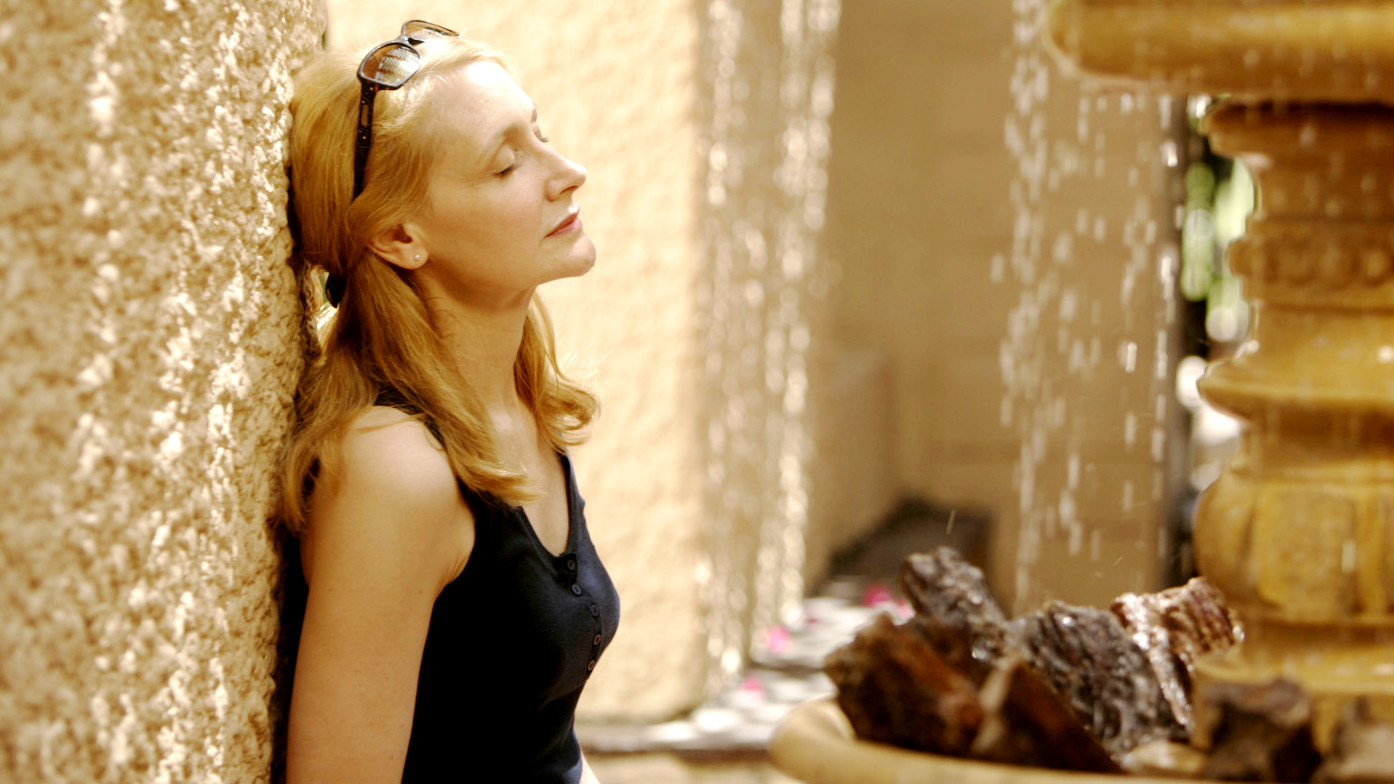
The first ten minutes of Cairo Time are devoted to Juliet wandering around the streets recovering from jet lag in a lather of perspiration that attracts gangs of men in persistent, lascivious pursuit. Mark had warned her, she reveals, but still she is surprised at how young the men are. In flight to the relative safety of Tareq’s café Juliette loosens another button by having her first cigarette since adolescence.
Throughout most of the film Patricia Clarkson drapes a smile across her character's face that is both resigned to weariness, bemused by exotica and which I found annoying in the extreme. Perhaps it was the smile in combination with the numerous costume changes showing Juliette in blue, Juliette in wafting yellow, Juliette in beige linen, Juleitte with her head covered and backlit in silk in the mosque, all set against the backdrop of what looked like a travelogue financed by the Egyptian Tourism Commission.
Tired of waiting for Mark and worn out by her quiet desire for Tareq, Juliette blithely hops on a bus for Gaza. When the bus is stopped at the border by the Israeli Defence Force, Juliette alone is promptly removed and advised to call someone to collect her because the bus is to be refused entry. Why she couldn’t take the bus back to Cairo with everyone else is soon made clear when Tareq appears in his old Mercedes and ferries her back to her plush hotel where, exhausted by the ordeal, she takes to her bed for a nap before re-emerging in pale green just in time to bump into Tareq lurking in the foyer thumbing through a copy of Vous.
Off we go again into streets of Cairo, alive and vibrant, pulsing with oriental mystique, cast in the shadow of the pyramids but with danger always only a breath away from Tareq’s protective hand, resting gently on Juliette’s lower back as they stroll through the souk. I wondered half way through the film if the title referred to a slowing down of time in Cairo and concluded that it must and that the director had therefore opted for a hyper realistic rendering of Egyptian experience by making every moment interminable. The audience, however, were far less cynical and there were many chuckles, seemingly in recognition of the foibles of foreign romance, which I found rather surprising in such numbers given that the State Theatre was three quarters full. The ghost of Shirley Valentine may have been in the cinema.
Cairo Time won the best Canadian feature award at the Toronto International Film Festival which may not say much for the competition because the film is not so such much light romantic drama as lightweight and, for me at least, overwhelmed by weary bourgeois sentiment. If you’ve always wanted to see Cairo, however, I can recommend the film.
Bill Cunningham New York
Bill Cunningham is the veteran New York Times photographer and columnist who has spent most of his life pedaling around Soho and Manhattan on his bicycle documenting the variegated panoply of New York street fashion. Revered by socialites, fashionistas and his fellow journalists, Cunningham’s originality as an artist is in part due to his disinterest in the trappings of wealth and celebrity. He once passed on photographing glam queen Catherine Deneuve because she wasn’t wearing anything interesting at the time. For Cunningham, fashion is about individuality and freedom of expression that can be found where it counts most, on the street. He shoots on 35mm film on a Nikon without a motor drive or long lens and prefers the close up detail - an ankle, a shoe, an extravagant jacket, a whimsical hat – to the conventional long shot of the fashion pages. Vogue editor Anna Wintour says that it is slightly worrying when she walks past and Cunningham doesn’t raise his camera.
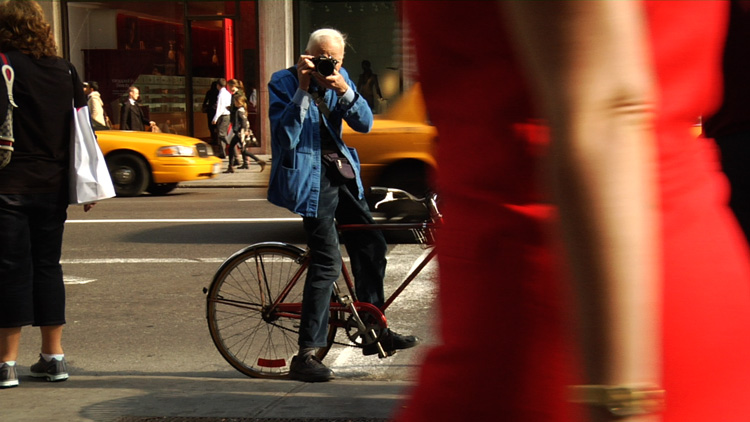
The success of this film rests entirely on the character of Bill Cunningham. For decades he was a resident of Carnegie Hall where he lived in a tiny studio with no kitchen and a bathroom in the hallway, his single bed mattress wedged between dozens of filing cabinets containing the negatives of every photograph he has taken in what is one of the most comprehensive and valuable archives of twentieth century fashion in existence.
Cunningham has a front row invitation to all the major fashion shows in New York and Paris and yet he eats in delis, wears cheap, blue Parisian dustman’s jackets, sturdy shoes and in no way looks the part of legendary member of the style council. Famously abstemious and thrifty, Cunningham declines all offers of food and beverage at the numerous society functions he attends preferring instead to ‘eat with my eyes’ through the viewfinder. Doing the rounds at a museum fundraiser he quips to one of the excessively well-heeled guests who reaches out to shake his hand: “Be careful, a handshake around here can mean you just signed up for a new wing for the museum.”
Remarkably energetic and self-deprecating, Cunningham posesses an enthusiasm for his work that is inspirational and infectious. “A man who seeks beauty will find it,” he says and then, remarkably, begins to cry before quickly recovering his trademark smile. Humanity is abundantly on the surface of Bill Cunningham. In one of the most poignant moments in the film he is asked if it is true that he attends church every Sunday and he answers that yes he does and again barely holds back tears, leaving the impression of a man with depths of private experience that make his ebullient nature so much more authentic. In the same sequence he reveals that he has never had any intimate, personal relationships because he has been too busy and never had time to think about it. Still waters indeed. Cunningham regards fashion as a kind of armour that protects the wearer from the mundane realities of life. I was left with the distinct impression that Bill Cunningham’s camera is his armour. For someone who loathes the fashion industry, I found his presence at its heart reassuring.
Budrus
The Israeli Separation Barrier which divides the Israeli and Palestinian populations was built by Israel with the intention of reducing the number of armed incursions and suicide bombings perpetrated by Palestinian resistance groups. The Barrier is more than 700 kilometres in length and runs north to south, meandering between Palestinian villages and Israeli settlements and often deviating wildly from the 1949 Armistice Green Line between Israel and the West Bank. The Barrier is an eight metre high concrete wall in some sections and layers of razor wire fencing in others with a sixty metre exclusion zone on either side. Defenders of the Barrier maintain that it has been effective in reducing suicide attacks. Palestinian opponents refer to it as an ‘apartheid fence’. The International Court of Justice has ruled that the Barrier is illegal under international law.

Budrus is a tiny village north of Ramallah in the northern West Bank region with a population of around 1400 people. When construction of the Barrier reached the village the inhabitants soon discovered that a significant area of olive groves would be uprooted to make way for the fence. Budrus is the story of the non violent resistance to the Barrier organised by the townspeople under the leadership of Ayed Morrar.
As the film’s director, Julia Bacha puts it:
"Ayed succeeded in doing what many people believe to be impossible: he united rival political parties Fatah and Hamas; he brought women to the heart of the struggle by supporting his daughter Iltezam's leadership; and he welcomed hundreds of Israelis to cross into Palestinian territory and join this nonviolent effort."
Budrus draws on interviews with members of the Israeli Defence Force and Border Police to state the Israeli case for the construction of the fence and the methods used to enforce it in Budrus. Extensive coverage of nonviolent action taken by the Palestinians and their Israeli activist supporters, many of whom were arrested for their role in the protests, provides a compelling insight into the Palestinian struggle for autonomy. The film does this by focusing on direct action organised by men and women of the village, with the women often adopting a front line stance against the IDF bulldozers, tear gas, rubber bullets and, at times, live ammunition.
Budrus deserves wide distribution in Australia and will hopefully be taken up by SBS or, better still in terms of audience reach, the ABC. In the shadow of the recent Gaza flotilla incident in which at least nine activists were shot to death by the IDF, some at point blank range, it is sobering to consider the consequences that confront even those who adopt nonviolent resistance. Budrus offers a valuable portrayal of an alliance between divergent Palestinian political factions and Israeli citizens opposed to the actions of their government. Perhaps most inspiring of all is the role played by the women, many of them teenage girls, in joining the protests and eloquently expressing their views and their hopes for the future. The film was produced with the assistance of Just Vision, a US based non profit group promoting nonviolent action and Israeli-Palestinian collaboration as a means to healing the running sore of one the world’s most violent and unjust wars.
The Most Dangerous Man in America

It was Henry Kissinger who called Daniel Ellsberg the most dangerous man in America, after Ellsberg released a seven thousand page, classified document to the The New York Times in 1971. The document was dubbed The Pentagon Papers and overnight Ellsberg became the world’s most notorious whistleblower. The Most Dangerous Man in America provides an incisive, detailed account of the one of the most celebrated incidents in American history, one which ultimately led to the Watergate fiasco and Nixon’s impeachment.
Daniel Ellsberg was a Harvard graduate in economics, a formidable and widely respected young intellectual who rose to prominence as a military analyst in the Pentagon and as an advisor to Secretary of Defence in the Nixon administration, Robert McNamara. Ellsberg’s area of interest was decision theory - how decisions are made in warfare - and he was hired to apply his Ellsberg Paradox paradigm in the analysis of US military strategy. He later served in Vietnam in the Marine Corps for two years before taking up a position at the RAND Corporation think tank where he was commissioned to work on a top-secret report on the progress of the Vietnam War. It was this document that Ellsberg smuggled piecemeal out of the RAND headquarters and spent months photocopying before passing it on to the New York Times.
The Most Dangerous Man..draws extensively on archival film and television footage, declassified taped telephone conversations and interviews with twenty five people directly involved in the Pentagon Papers incident and its aftermath. Neither Kissinger nor McNamara appear as interviewees. Ellsberg himself narrates the film, bringing to it not only his personal observations of the personalities and circumstances of the time but also the incidents from his personal life which influenced his decision to blow the whistle on the level of secrecy and deception the Nixon administration was engaged in.
Ellsberg reveals that the death of his mother when he was thirteen had a profound impact on his relationship with his father. The car in which the family was travelling veered off the road killing Ellsberg’s mother and sister. Because it was his father who had fallen asleep at the wheel the young man lost faith in paternal authority, an attitude he carried over into his work with government. Ellsberg had a profound mistrust of his leaders which, when combined with the rising tide of moral outrage that swept the US during the late sixties and early seventies, led to an epiphany in which he recognised his calling as a anti-war activist, a role he continues to play with vigour to this day. In doing so he has sacrificed his career and a number of important friendships.
Two relatively minor scenes in the film stand out for me. In the first, Ellsberg is assigned to research incidents of Vietcong torture of US serviceman, the evidence of which would then be used to convince then President Johnson to escalate the war. In the second, Ellsberg is briefing Kissinger, who had recently taken up the position as Secretary of State, on the advantages and pitfalls of being granted full access to classified material. Both of these scenes illustrate the central role played by the Pentagon in shaping the information provided to political leaders, upon which they would base decisions that would change the course of history, and in doing so, destroy the lives of two million Vietnamese citizens and more than fifty thousand American servicemen. The parallels with Iraq and Afghanistan did not go unnoticed.
Women Without Men

Women Without Men is based on Shahrnush Parsipur’s magic realist novel of the same name. The novel is banned in Iran. Shirin Neshat is an Iranian born visual artist living in America whose work explores the intersection of Persian culture, Iranian history and politics and the experience of women living under oppressive regimes, both religious and secular.
Women Without Men is Neshat’s first feature film for which she was awarded the best director award at the Venice Film Festival in 2009. Set in Iran in the summer of 1953, the film tells the interwoven stories of four women living in a period of change that would shape the country and its people for decades to come. Neshat has said that she regards Iran as the fifth major character in the film but, not surprisingly, the film was shot in Morocco and not in her native country. In 1953 Iran had a socialist government led by democratically elected Prime Minister Mohammad Mosaddegh who had nationalised the British-owned Anglo-Iranian Oil Company in 1951.In response, Britain imposed a naval blockade on Iranian oil exports and the CIA orchestrated a coup d’état which resulted in a twenty five year dictatorship under the regime of Mohammad-Rezā Shāh Pahlavi.
In 1979, The Shah was overthrown in the Islamic Revolution under the leadership of Ayatollah Ruhollah Khomeini, whose regime was the precursor of the current government of President Mahmoud Ahmadinejad. Women Without Men is dedicated to “the memory of those who lost their lives in the struggle for freedom and democracy in Iran - from the Constitutional Revolution of 1906 to the Green Movement of 2009.”
As with all of the very fine films from the Middle East screening at this year’s Sydney Film Festival, it is helpful to understand the socio-political context in which the narrative takes place. Indeed, one of the remarkable aspects of seeing these films is the stark comparison they make with so many European, American and Australian films, which assiduously avoid this kind of historical framing. And yet, Women Without Men is in no way bogged down by its embrace of the political. Quite the reverse. In this film, the lives of every character, especially those of the four women at the centre of the story, are shaped by those deterministic forces. Women Without Men takes things a step further by adopting a highly poetic visual language, most evident in the exquisite photography of Martin Gschlacht under the finely honed artistic direction of Shirin Neshat. The film plays on the magic realism of the novel on which it is based to create a narrative structure that shifts between life and after-life, the rational and the inexplicable.
Women Without Men is a film for those who wish to understand something of Iran and its people beyond the stereotypes generated by the western media. It is a very beautiful film, full of warmth and tender observation and yet it is unafraid of harshness and brutality. The performances are all compelling, the music divine (it was nice to see Ryuichi Sakamoto in the credits) and the art direction precise and evocative. Shirin Neshat and her collaborators have created a powerful statement of gender, politics and poetry.


No comments:
Post a Comment